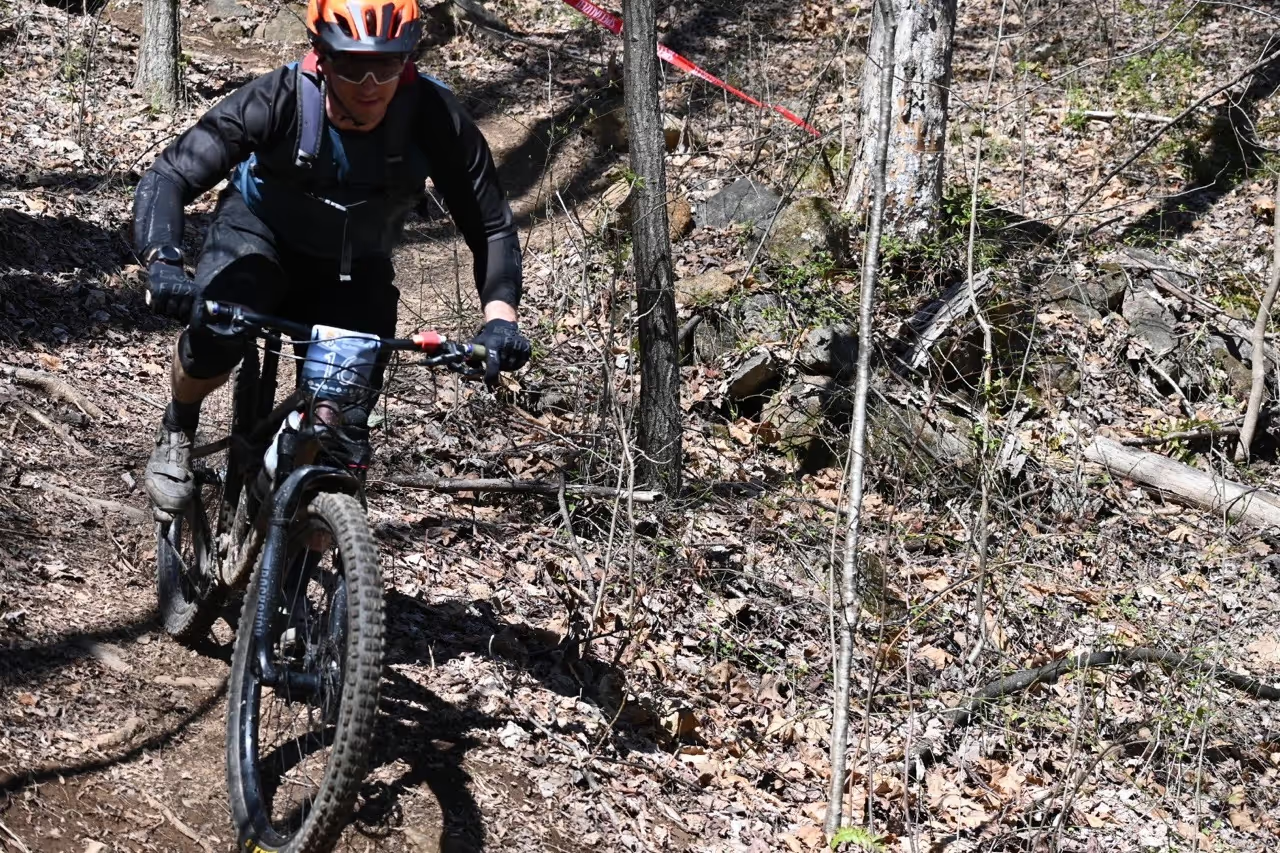
When most cyclists think about improving performance, they focus on miles, cadence, or gear ratios. But one of the most overlooked performance drivers lives at the center of your body: stability—particularly in the hips and core.While strength and endurance are essential, they only work efficiently when your body has a stable foundation. In cycling, that means having the ability to control your trunk and pelvis while your legs are generating repetitive force across long distances. Without this control, energy is lost, power output decreases, and the risk of overuse injuries skyrockets.
At Whole Strength PT, we work with cyclists in Charlottesville and Manhattan who often present with strong legs but underperforming cores and hips. Once these areas are retrained to stabilize effectively, cyclists see measurable improvements—not only in how they feel but in how they ride.
How the Core and Hips Influence Pedal Efficiency
Every pedal stroke begins at your core. While your legs are the primary movers, your hips and core act as the control center—stabilizing the pelvis, aligning the spine, and transferring power smoothly through the lower body. When these areas are strong and stable, energy flows efficiently from your torso into each pedal stroke. But when there’s instability—like weak glutes, poor pelvic control, or a disengaged core—your body compensates. That might look like:
- Rocking hips during hard efforts
- Excessive pressure on the hands or shoulders
- Reduced cadence consistency
- Uneven pedal force distribution between legs
Over time, these inefficiencies add up. They not only sap your endurance but also increase wear and tear on joints and soft tissues. For cyclists pushing mileage or working toward performance goals, core and hip control become non-negotiable. At Whole Strength PT, we help cyclists retrain these movement systems, so the core and hips support—not sabotage—your pedal stroke.
Common Cycling Issues Caused by Instability
Cyclists are no strangers to discomfort—but not all pain is just “part of the ride.” Many common complaints can be traced back to poor core and hip stability. When these foundational systems underperform, other muscles and joints are forced to compensate, leading to breakdown over time.Here are a few issues we frequently see at Whole Strength PT:
- Low back pain: Weak core control places excess strain on spinal stabilizers, especially during long climbs or extended efforts in the saddle.
- Knee tracking problems: Without proper hip alignment, the knee can drift inward or outward during pedaling, contributing to joint irritation or patellofemoral pain.
- Hip tightness or soreness: Instability causes overactivation of certain muscle groups (like the hip flexors or piriformis), which become tight and fatigued.
- Early fatigue or loss of power: When your core isn’t providing adequate support, your legs do more than their share—burning out faster and losing efficiency.
- Numbness or discomfort in the hands and shoulders: An unstable trunk shifts weight forward, placing unnecessary load on the upper body.
These issues aren’t just annoying—they limit your performance and can derail your training. Addressing the root cause through targeted physical therapy helps you ride longer, stronger, and with fewer setbacks.
Common Cycling Issues Caused by Instability
Cyclists are no strangers to discomfort—but not all pain is just “part of the ride.” Many common complaints can be traced back to poor core and hip stability. When these foundational systems underperform, other muscles and joints are forced to compensate, leading to breakdown over time.Here are a few issues we frequently see at Whole Strength PT:
- Low back pain: Weak core control places excess strain on spinal stabilizers, especially during long climbs or extended efforts in the saddle.
- Knee tracking problems: Without proper hip alignment, the knee can drift inward or outward during pedaling, contributing to joint irritation or patellofemoral pain.
- Hip tightness or soreness: Instability causes overactivation of certain muscle groups (like the hip flexors or piriformis), which become tight and fatigued.
- Early fatigue or loss of power: When your core isn’t providing adequate support, your legs do more than their share—burning out faster and losing efficiency.
- Numbness or discomfort in the hands and shoulders: An unstable trunk shifts weight forward, placing unnecessary load on the upper body.
These issues aren’t just annoying—they limit your performance and can derail your training. Addressing the root cause through targeted physical therapy helps you ride longer, stronger, and with fewer setbacks.
Signs You Might Be Lacking Core or Hip Stability
Not all instability announces itself with pain—sometimes the signs are subtle. Many cyclists push through small inefficiencies without realizing that their performance is being limited by poor foundational control.Here are some signs that may indicate you need to focus on hip or core stability:
- Hips rock side to side during hard efforts or while climbing
- One leg feels more powerful or dominant than the other
- Post-ride soreness shows up in your lower back, hip flexors, or neck
- You fatigue quickly during tempo rides or lose power late in your workout
- You shift forward onto your hands to maintain posture or relieve pressure
- You're frequently stretching tight hamstrings, quads, or glutes without lasting relief
You don’t have to wait for a full-blown injury to take action. These small signs are your body’s early warnings—and they’re often reversible with the right attention and training.At Whole Strength PT, we help cyclists identify and correct these dysfunctions through movement screening, video analysis, and hands-on evaluation. If you recognize these patterns in your own rides, it may be time to reassess what’s going on beneath the surface.
How Physical Therapy in Charlottesville Helps Cyclists Build Control
At Whole Strength PT in Charlottesville, we take a performance-driven approach to helping cyclists correct the root causes of instability. Whether you're dealing with recurring discomfort or looking to maximize your efficiency, our process is built around the demands of your sport.Here’s how we support cyclists through targeted physical therapy:
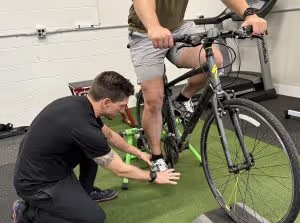
- Comprehensive Movement Assessment: We evaluate posture, hip mobility, pelvic control, and trunk endurance—both on and off the bike.
- Neuromuscular Re-education: We retrain the core and glutes to fire at the right time, in the right sequence, for smoother and more powerful movement.
- Manual Therapy and Soft Tissue Work: Hands-on treatment addresses tightness and restrictions that may be masking deeper stability deficits.
- Sport-Specific Training: Using drills and positions that mimic the cycling posture, we reinforce control in ways that carry over directly to the bike.
- Progressive Strength and Endurance Building: Once control is restored, we help you develop lasting durability to support higher mileage and intensity.
Whether you're racing, commuting, or simply riding for joy, hip and core stability form the base of your performance. Our cyclist performance program is designed to help you ride more efficiently, recover faster, and reduce your risk of injury.
Build a Stronger Foundation for Better Cycling
Cycling is more than just leg power—it’s about how well your entire body works together to produce smooth, efficient movement. Without strong hip and core stability, even the fittest cyclists can struggle with performance plateaus, nagging discomfort, or recurring injuries.By focusing on the foundational systems that support your pedal stroke, you can unlock greater power, endurance, and control—no matter your experience level.At Whole Strength PT, we help cyclists in Charlottesville and Manhattan build that foundation through expert assessment, hands-on care, and performance-focused programming. Whether you’re riding recreationally or chasing a new PR, we’re here to help you ride smarter and stay stronger.Learn more about our Cyclist Performance Program or get started with an evaluation.