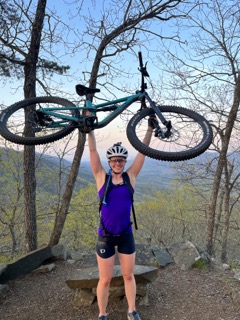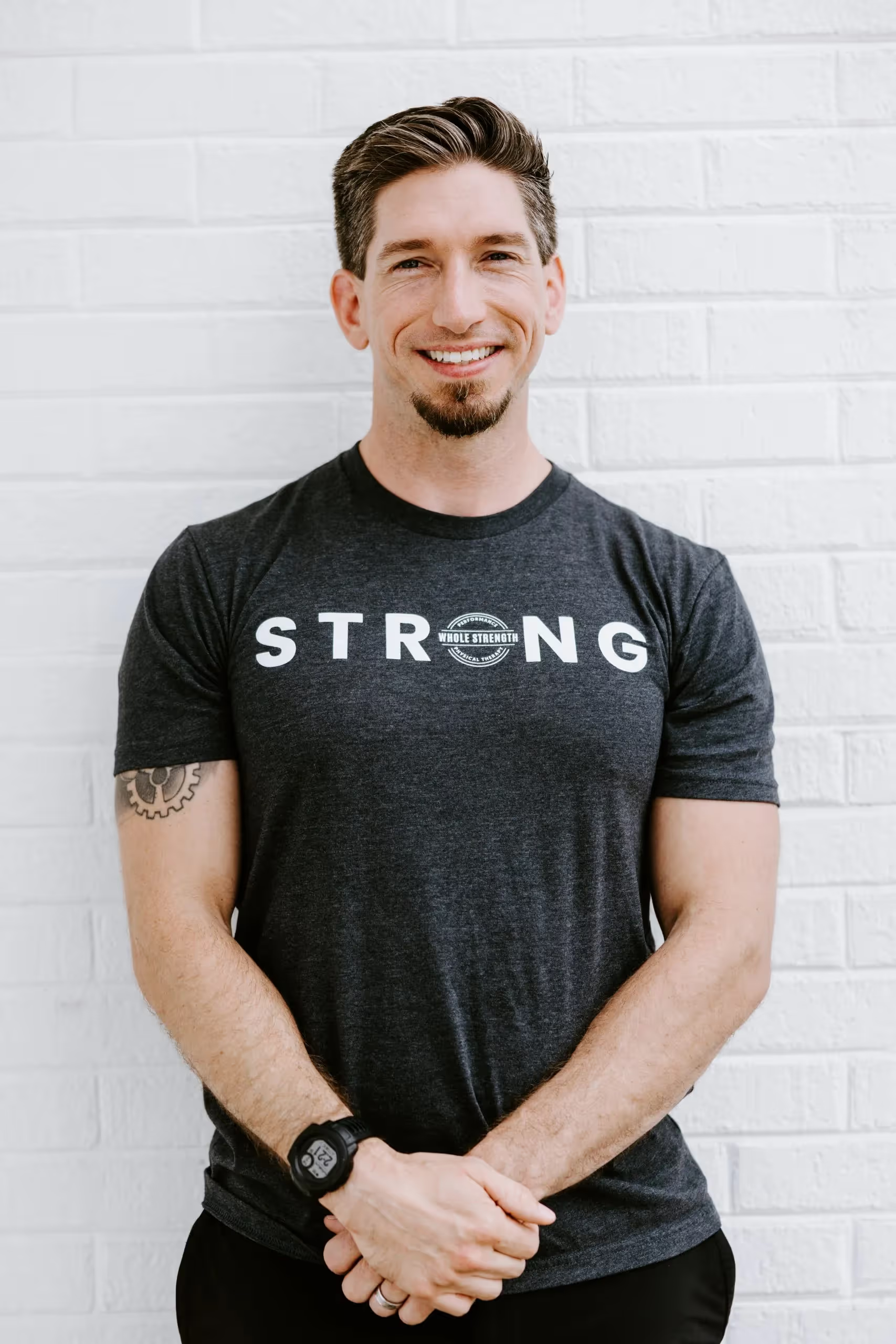
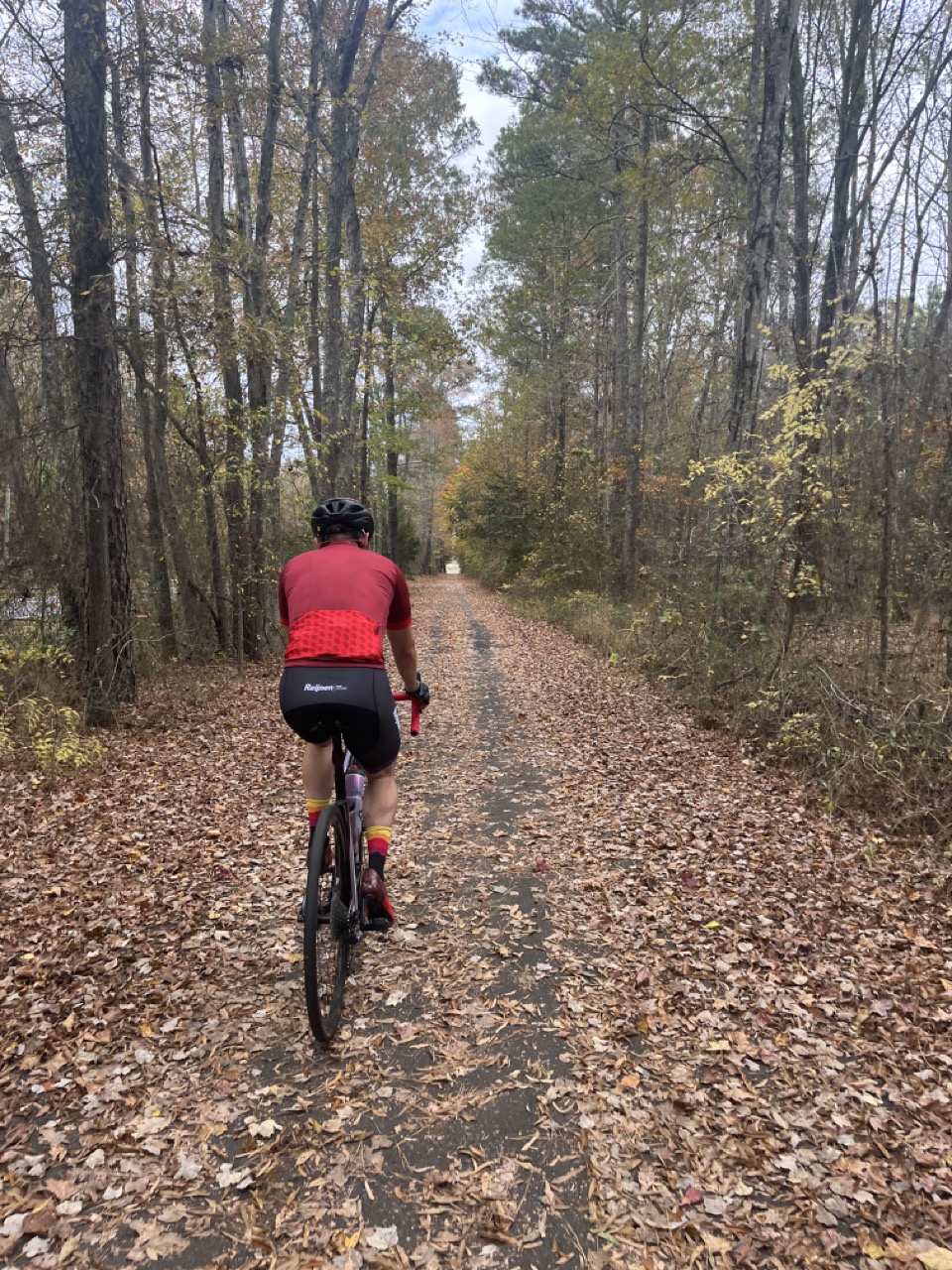
We are lucky to have great places to ride in and around the Charlottesville and Central Virginia area. While I love to ride, getting some work off the bike is important to be able to stay healthy while on it. Read on to learn more about how you can incorporate other forms of training into your workouts to reduce common issues that we see in cyclists and mountain bikers to stay good now and be able to keep pushing yourself as long as you want to!
The Benefits of Cross Training
Cross training is participating in multiple forms of exercise to develop overall fitness. In addition to spending time on the bike, it is optimal to include either rowing, running, weight lifting, or swimming. Cross training helps to prevent injury by giving your bones, joints and muscles a different stress than they are used to, helping them build resilience, strength, and prevent under-recovery.
Bones need weight bearing to stimulate production and keep healthy bone mass. When cyclists spend a lot of time on the bike without adding in impact or other loading, bone density can decrease and this may lead to injury.
Joints and muscles benefit from being moved and used through full range motion. When you are on a bike your body is only being used in a few specific positions with little variability. Neglecting other movements and stressors can lead to strength and mobility issues in and outside of cycling. Cross training gives your body the exposure to other good stressors that it needs to be adaptive, mobile and strong.
Not sure which type of cross training to choose?
I would recommend strength training!
Why choose strength training over swimming or running?
While running and swimming are great ways to cross train, I would recommend strength training to get the most out of your time. Below are just a few of the benefits that are most relative to cycling athletes:
- Development of power
- Increase in endurance
- Builds resilience in your joints and muscles
- Increases coordination and efficiency on the bike
- Builds stronger bones
What aspects of riding challenge strength the most?
For road cyclists: riding out of the saddle and climbing and sprinting calls for the most power to be put to the pedals, requiring coordination and strength in the trunk and legs. These are the situations where a lack of strength will show.
For mountain bikers: climbing, absorbing impact from drops or jumps, and maintaining body position while throwing the bike around turns and rough terrain will significantly tax strength and expose any weaknesses.
What happens on the bike when you are stronger?
Better performance! When your body is stronger, any part of biking that requires the more-than-usual effort will feel easier. Your body will have more reserves and will be able to handle more physical stress. This can reduce your risk of injury and also make you faster!
How do you feel on the bike after you’ve been doing more strength training?
When resistance training is performed properly the cyclists and mountain bikers I work with notice that they feel more powerful and less fatigued by longer rides. Typical aches and pains become less prevalent or don’t show up at all.
What’s more important: upper body or lower body?
My answer to this question depends on what your discipline is and what weaknesses show up in a movement screen or injury risk screen. Every athlete is different and has different goals. If you had to choose I would recommend focusing on trunk/core and leg strengthening. If you have time, adding in mid to upper back exercise would also have a lot of benefit due to the amount of time leaned forward when in the saddle.
What are some unsuspecting muscles that are used when road or mountain biking?
Abdominals, scapular muscles (for protraction, retraction and cervical extension), glute med, arms and shoulders (mountain biking).
Ready to take the first step toward a pain-free, active life?
Contact us here -- the top Charlottesville Physical Therapy Clinic, to schedule your free consultation today. Together, we’ll create a plan to get you stronger and back to doing what you love.
Disclaimer: The information provided in this blog is for educational purposes only and should not be considered a substitute for professional medical advice or treatment. Always consult with a qualified healthcare professional before starting any exercise program, especially if you have a pre-existing medical condition or injury.