By: Dr. Nate Swarringim
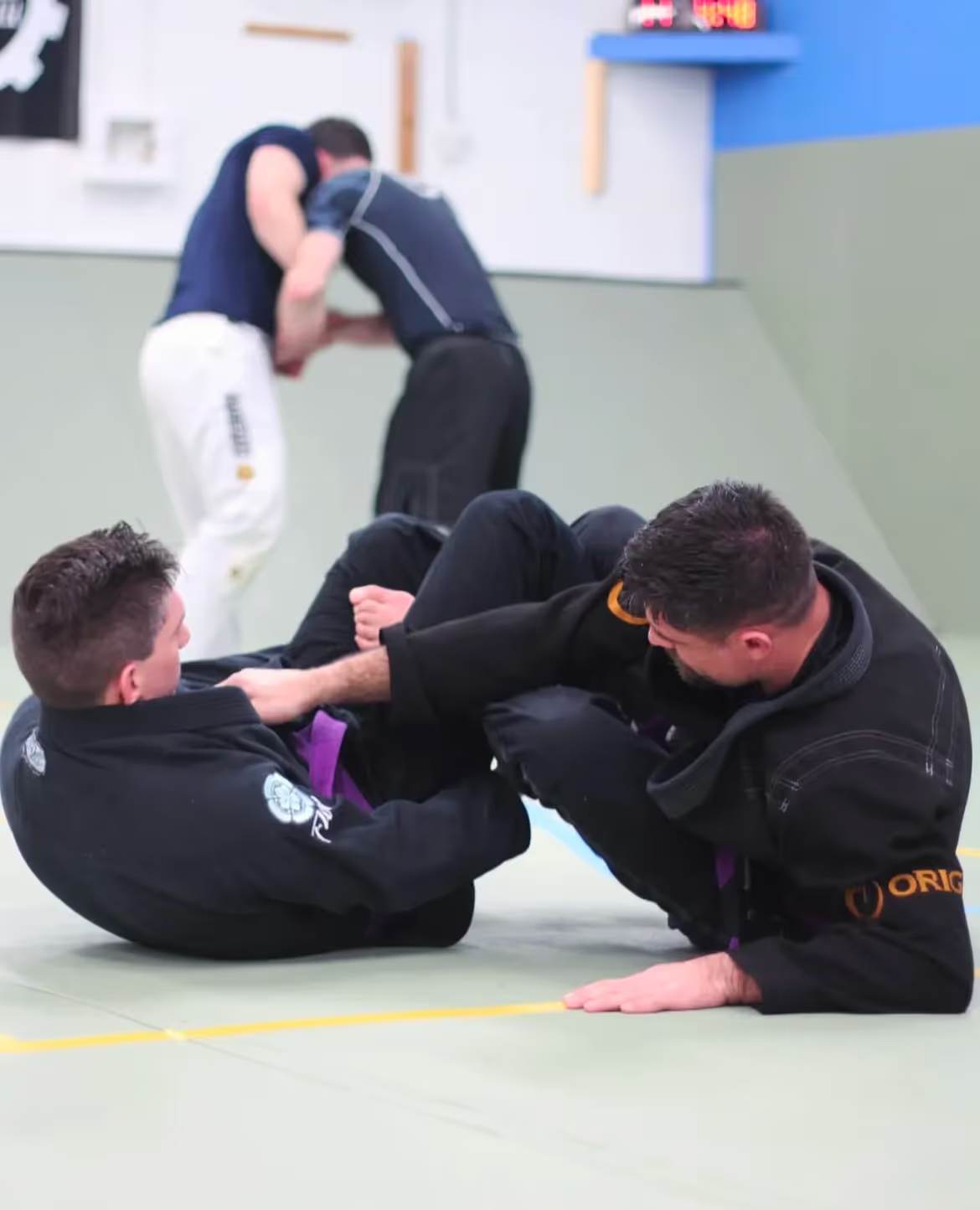
When I consider ways to stay healthy, grappling and techniques like joint locks and chokes might not be the first things I think of. While injuries will happen in combat sports, it's important to focus on injury prevention in Jiu-Jitsu. A more realistic goal is to emphasize injury mitigation and minimize the risk of severe or debilitating injuries. With the right knowledge and tools, you can maintain your health while practicing jiu-jitsu for a long time.
What are your goals?
Jiu-Jitsu looks different depending on what you want out of the sport.
Do you want to compete at a high level?
Are you practicing BJJ to help improve your fitness or mental health?
Do you want to be more confident and capable of self-defense?
The stress your body endures in Jiu-Jitsu varies based on individual experiences, but it fosters physical and mental toughness. It takes resilience to stay composed when someone is using their full weight against you, trying to force you to submit.
How can you promote a resilient body and prevent injuries while practicing Jiu-Jitsu?
Focus on these key areas of fitness to maintain your health.
- Back mobility (upper and lower)
- Hip mobility
- Neck, back, core, and leg strength
- Good cardio fitness
Finding the time to work on developing strength and mobility is challenging if you’re busy with work, family, or hobbies. The good news is that you don’t need to work on everything simultaneously. You can shift the focus on your fitness just like you shift your focus within jiu-jitsu training.
From our blog:
Blood Flow Restriction: Reduce Pain and Improve Your Outcomes
ACL Rehab at Whole Strength
Performance Testing to Fill the Holes in Your Fitness
Is A Lack of Shoulder Mobility Holding Back Your Performance in Crossfit?
Good programming will account for full-body strengthening, cardio, and mobility. Being familiar with strength training puts you one step ahead. If you need help, consider working with us as the only physical therapy experts in Charlottesville with specific knowledge of Jiu-Jitsu to build an individualized program specific to your needs on the mat.
After working with many Jiu-Jitsu athletes, I have noticed some patterns and common areas for improvement.
Stiffness and lack of mobility in the back and hips
Surprisingly, I see this in most BJJ athletes I treat. In Jiu-Jitsu, you spend a fair amount of time in a crunched position, maintaining strong frames to avoid having your opponent straighten you out. Outside the gym, many people spend most of the day sitting at a desk, slumped, leaning towards a computer, furthering their forward-rounded posture.
What can you do to improve your back mobility?
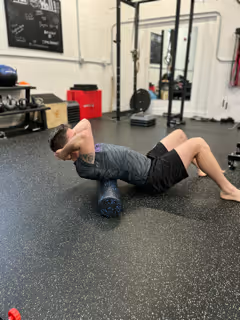
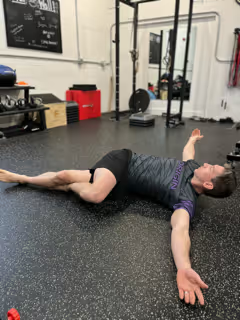
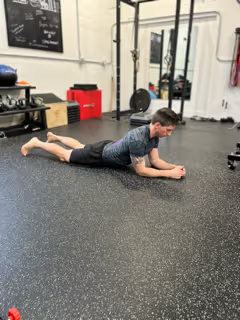
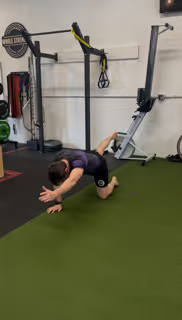
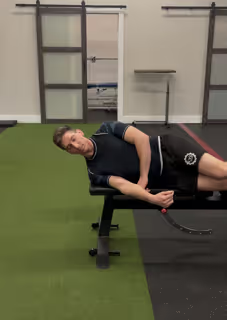
Try thoracic spine mobilizations on the foam roller, open books, and lie on your stomach.
What can you do to improve your hip mobility?
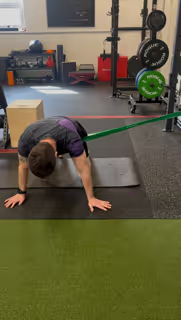
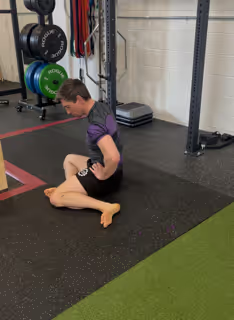
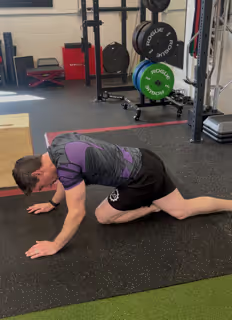
Try using a band to help mobilize your hips, followed by some active mobility work such as S-sitting or sit-throughs, and try this posterior capsule stretch (different than a pigeon stretch)
Strength the missing piece?
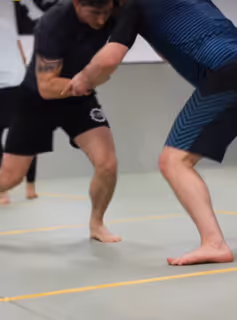
From what I’ve seen through training on the mats and working with many of Charlottesville’s BJJ athletes in the clinic, most would benefit from working more on core and leg strength. It takes a lot of practice and a strong core to keep tight frames for a solid guard. And when considering stand-up, it’s an advantage to have stronger legs.
I’m not only talking about an advantage over your opponent but also a shield against acute knee injuries. Stronger legs will give you more stability, reducing the likelihood of injury.
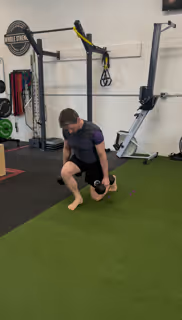
Here are a few trunk, leg, and neck strengthening exercises that translate well to Jiu-Jitsu:
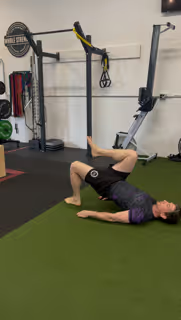
Split squats, single leg bridge, and bird dogs
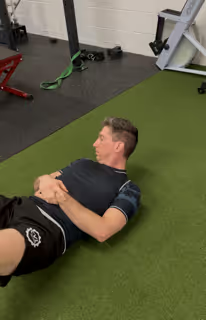
Lateral head raises, chin tucks with rotations
Check out additional neck strengthening exercises that have good carry-over to Jiu-Jitsu here.
Working on a few of the above exercises can make a big difference in how you feel on and off the mats. It’s common to have aches and pains pop up when training, but they should not be long-lasting.
Use the tools above to be more proactive in building a resilient body. Need some help?
Schedule an appointment in Charlottesville with us for expert physical therapy guidance on gaining strength and mobility to help prevent injuries and continue doing what you love.
Disclaimer: The information provided in this blog is for educational purposes only and should not be considered a substitute for professional medical advice or treatment. Always consult with a qualified healthcare professional before starting any exercise program, especially if you have a pre-existing medical condition or injury.