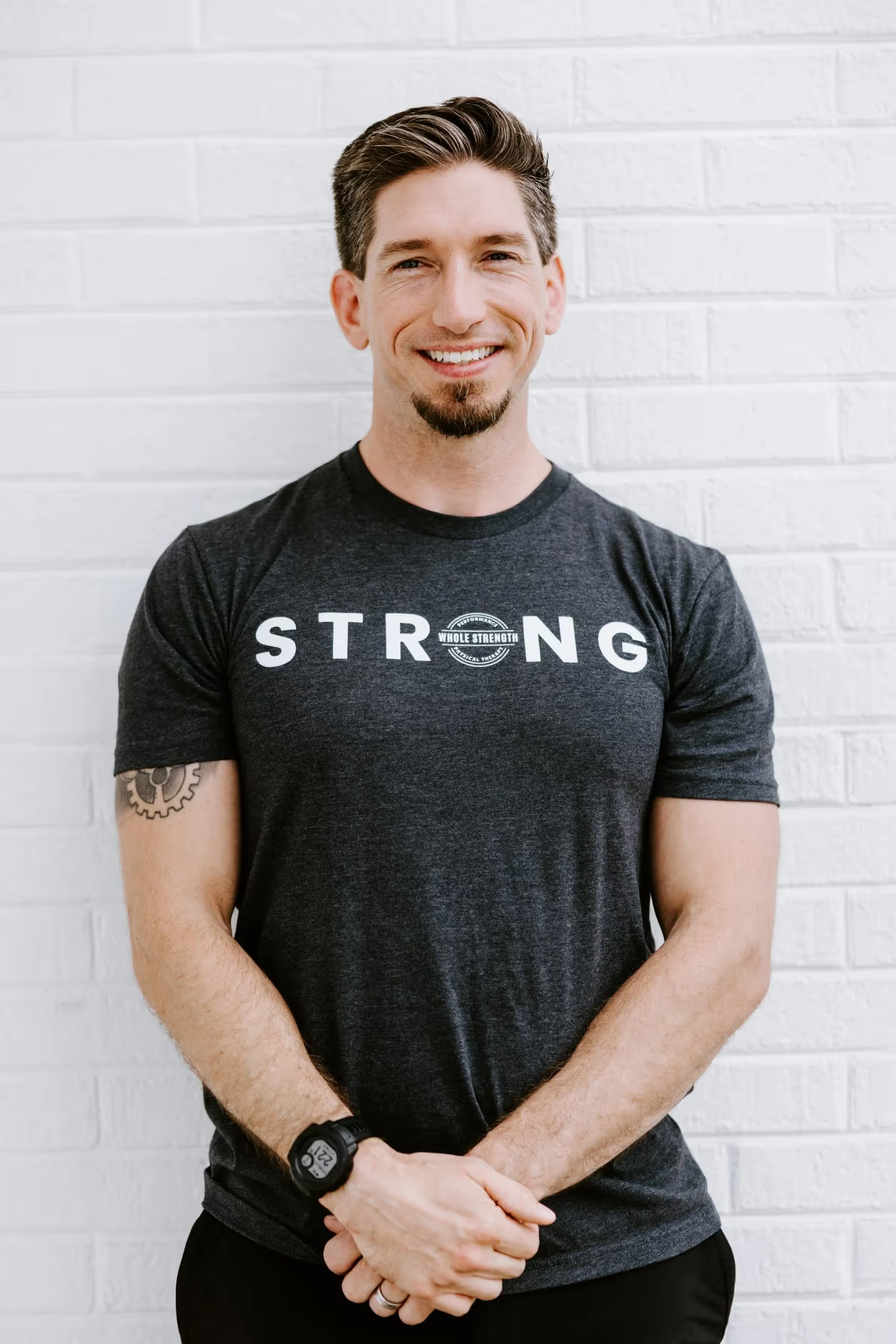
Written by: Dr. Nate Swarringim, DPT, OCS
In practicing Brazilian Jiu-Jitsu we do our best to take care of our training partners and teammates while simultaneously trying to get them to tap out to joint locks and chokes. There’s definitely a balance to it all. That being said, injuries happen. BJJ is a very physically demanding martial art.
Outside of acute injuries, as you continue your journey as a BJJ athlete the odds are you might also experience aches and pains that gradually creep up over time. You might feel that you have some strength or flexibility deficits that are starting to affect your game or even your ability to stay on the mats.
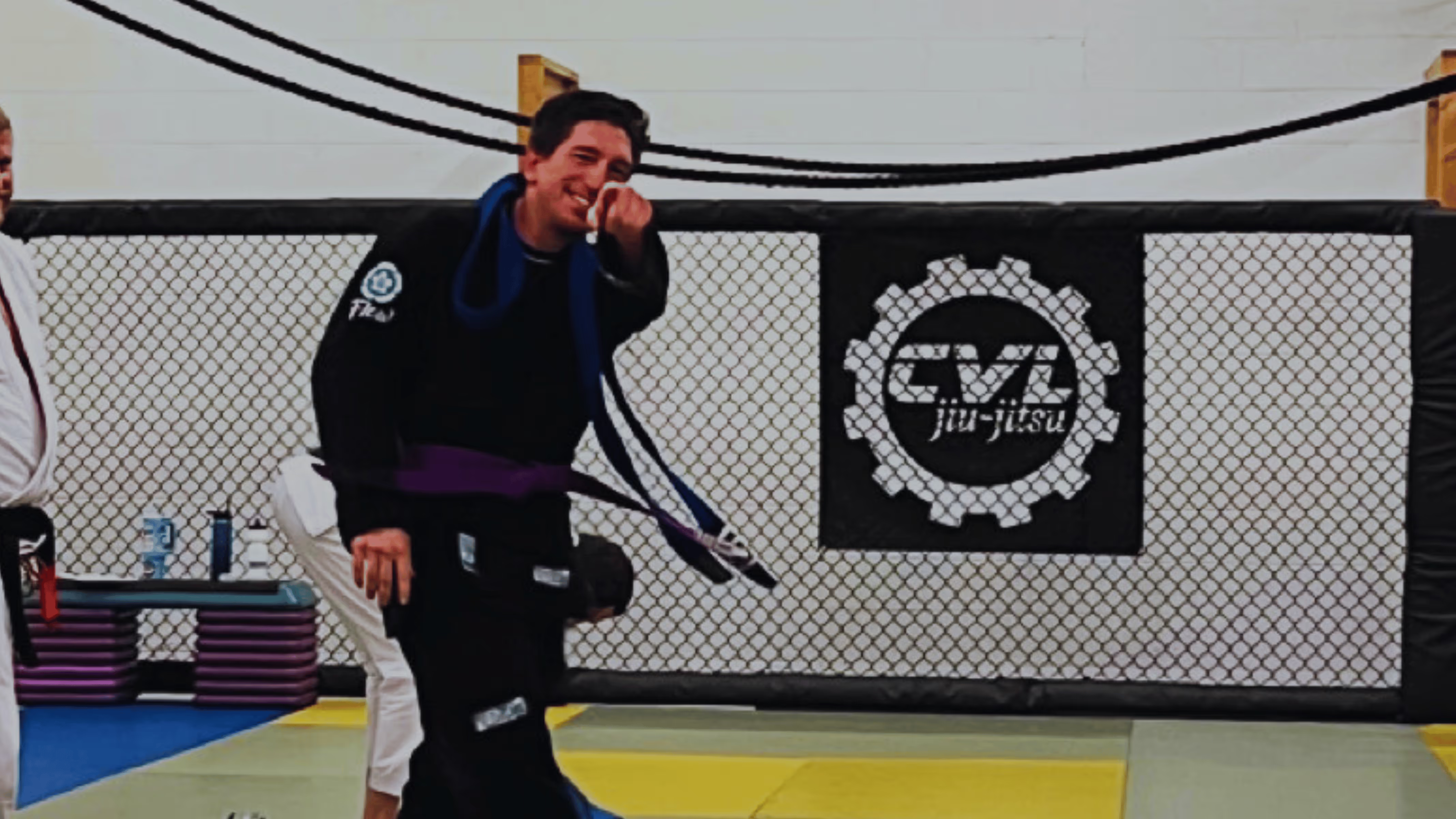
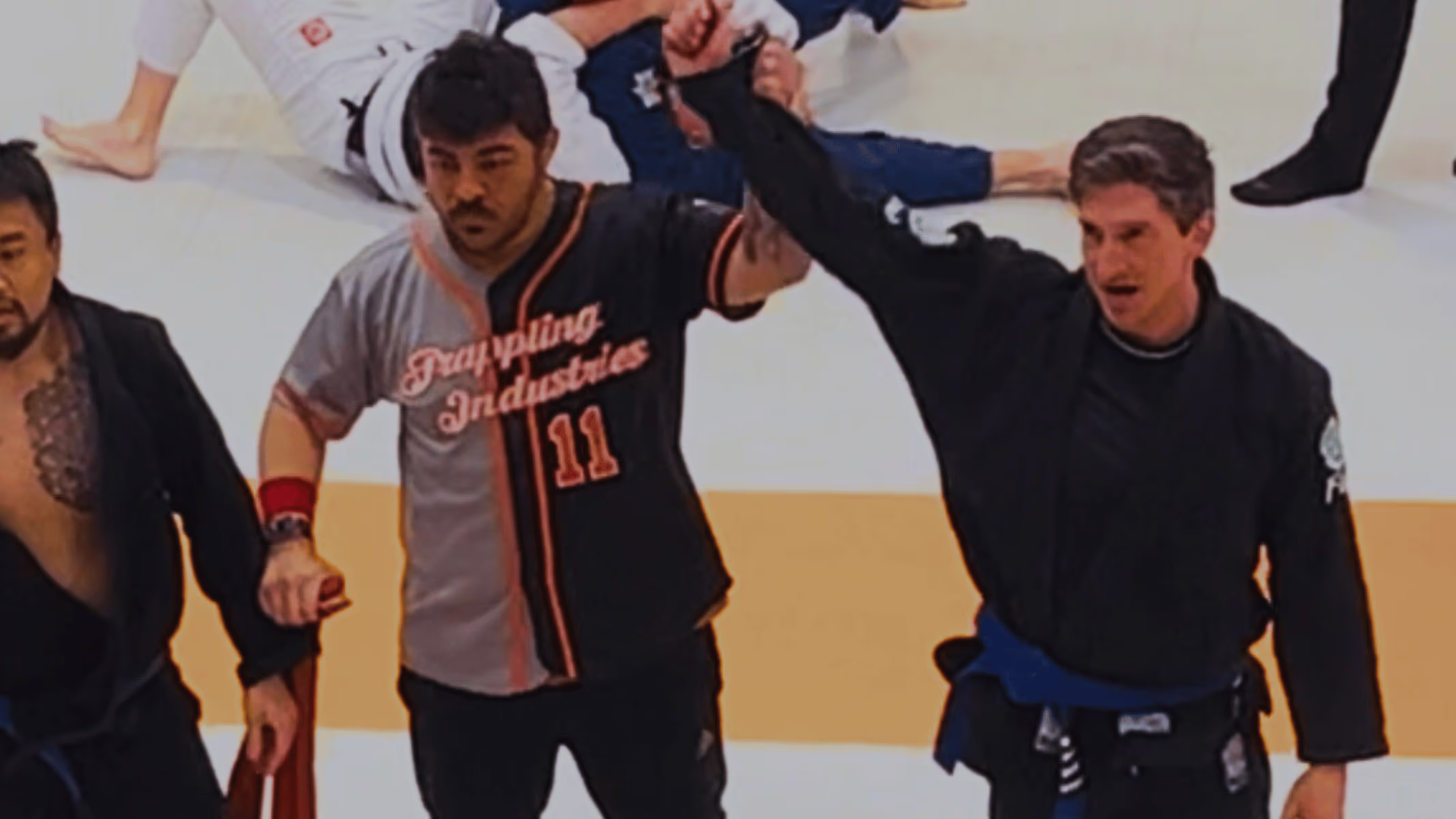
I sat down with Gordon Emery, the owner and head instructor at my school, Charlottesville Brazilian Jiu-Jitsu, and asked him about things that he sees in the gym. We discussed the prevalence and types of injuries, and trends that he has seen over the past 16+ years of teaching BJJ.
______________________________________________________________
Below is our Q&A which gave me some good insight on what to focus on in regards to injury prevention not only for myself, but for my teammates and my clients who practice jiu-jitsu.
Nate: What do you find are the most physically demanding movements for you? For others?
Gordon: “Lifting up a big ass dude and tossing him over his head”
“I think wrestling on the feet for takedowns requires a number of attributes (cardio, leg strength, strong posture, knowledge of the takedown game, proper defense, good hand fighting) that if you don’t have them it is a really hard practice.”
Nate: What positions or techniques do you feel require the most flexibility?
Gordon: “The Guard position tends to favor the flexible. Open and Closed both need a bit of hip mobility to perform well.”
“When defending leg locks or the leg entanglements, flexibility helps prevent injuries and aiding in escaping safely.”
Nate: What are some of the most common injuries you see in the gym?
Gordon: “Most common are the minor injuries that occur weekly like scrapes, poked eyes and bloody noses. We get a major injury every once and a while and sometimes we get a wave of a specific injury which has been an interesting phenomenon. Like a wave of finger dislocations or popped ribs.”
“In those times I have addressed the issue in classes with warm up exercises that target those areas for stretching and strengthening. It has given me some interesting data that has helped my overall knowledge of how to teach people jiu-jitsu better.”
“Common ones are:
Cauliflower ears
Dislocated fingers
Wrist strains
Popped floating ribs
Ankle strains
Meniscus tears in the knee joint
LCL and MCL tears in the knee joint
Rotator cuff strains and loss of motion”
“I also see an increase in nagging recurring injuries generally from the 30+ crowd such as lower back and neck strains. Good body positioning in Jiu-jitsu is a crunched closed position that can develop a muscular imbalance if the backside of the body isn't stretched or strengthened regularly. Tight Hip flexors and IT bands also can also be an issue after a few years of training that lead to knee issues.”
Nate: What are some of the most common physical limitations you see in the gym?
Gordon: “Hamstring flexibility and lack of core strength.”
Nate: Do you see room for improvement in mobility and strength?
Gordon: “Yes, always! An able body is a capable body and much easier to do jiu-jitsu.”
Nate: If you could magically wake up one morning with twice the strength in one muscle group, what would you choose?
Gordon: “Arms and chest. I have some old injuries that have kept me from working out these areas and developing so I focus on using my legs and core for my strength.”
Nate: If you had more time during class to focus on warm-ups, what are a couple moves that you would throw in?
Gordon: “Whole body mobility exercises like broad jump, bear and crab walking. These motions I think contribute to a functional strength that translates well to Jiu-Jitsu positions and techniques.”
Nate: Do you see more injuries in higher belts or lower belts?
Gordon: “Lower belts are still conditioning their body to the practice so I see more. The higher belts that train smart most of the time don’t get seriously injured but get more nagging injuries (I suspect from tight myofascial and getting old). Generally they have been training longer and have more wear and tear on their body from the years.”
Nate: What are some common physical fitness or injury-related questions that you get from students?
Gordon: “Common questions that I get a lot from students:
- How do I get back after being away with an injury?
- How do I stretch (chosen muscle) ?”
______________________________________________________________________
From our physical therapy blog
How Physical Therapy Can Help You To Resolve Your Rotator Cuff/Shoulder Pain
Blood Flow Restriction: Reduce Pain and Improve Your Outcomes
Solve Your Pain and Get Back to Activities You Love with Performance Physical Therapy
In summary, it pays to take care of your body and stay on top of your health. If you notice you’re having difficulty with certain movements or positions it is better to address those things rather than just see what happens. From my experience, many people take the “just see what happens” approach with smaller nagging injuries, but they tend to creep back up eventually and can be more troubling than before.
Special thanks to Gordon and Cville BJJ for his time and valuable info!!!
Are you dealing with an injury or nagging pain that is limiting your BJJ practice or keeping you from competing? Contact us to get a full performance assessment! It’s invaluable to have an expert with years of mat experience watch you move and get an in-depth understanding of where your whole body fitness is at.
Click on the button below to book a free discovery call and we can discuss your issues and determine a plan to get you back to training better than before!